The front seats are structured to reduce impact force applied to the head of the occupant in a vehicle collision.
A position memory seat has been adopted on the driver's seat. (with position memory system) (See POSITION MEMORY SYSTEM.)
8-WAY power seats have been adopted on the driver's seat. (with power seat system) (See POWER SEAT SYSTEM.)
6-WAY power seats have been adopted on the driver's seat. (with power seat system) (See POWER SEAT SYSTEM.)
4-WAY power seats have been adopted on the front passenger’s seat. (with power seat system) (See POWER SEAT SYSTEM.)
A seat warmer system has been adopted on the front seat backs and front seat cushion. (With seat warmer system) (See SEAT WARMER SYSTEM.)
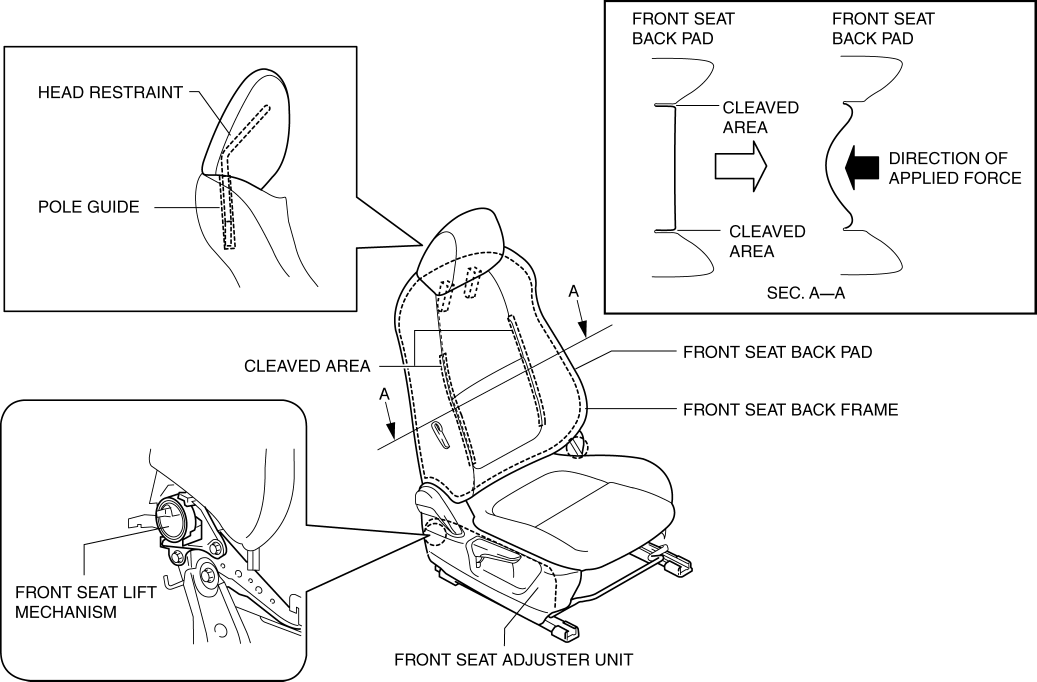
The front seats reduce impact force applied to the head of the occupant in a vehicle collision by improving the rigidity of the pole guides and setting the head restraints so that they tilt forward.
The front seat adjuster unit has improved rigidity by locating the front seat lift mechanism to the area around the connection part on both sides of the front seat back and the front seat cushion, and the backward lean of the front seat back when the occupant's body is pushed backward in a vehicle collision is controlled.
If the occupant’s body is pushed backward in a vehicle collision, the front seat back pad separates from the cleaved area and only the center part of the pad is pressed in rearward.
Function not equipped.