-
The valve, valve spring, valve seal, and valve guide are assembled to the cylinder head as a single unit.
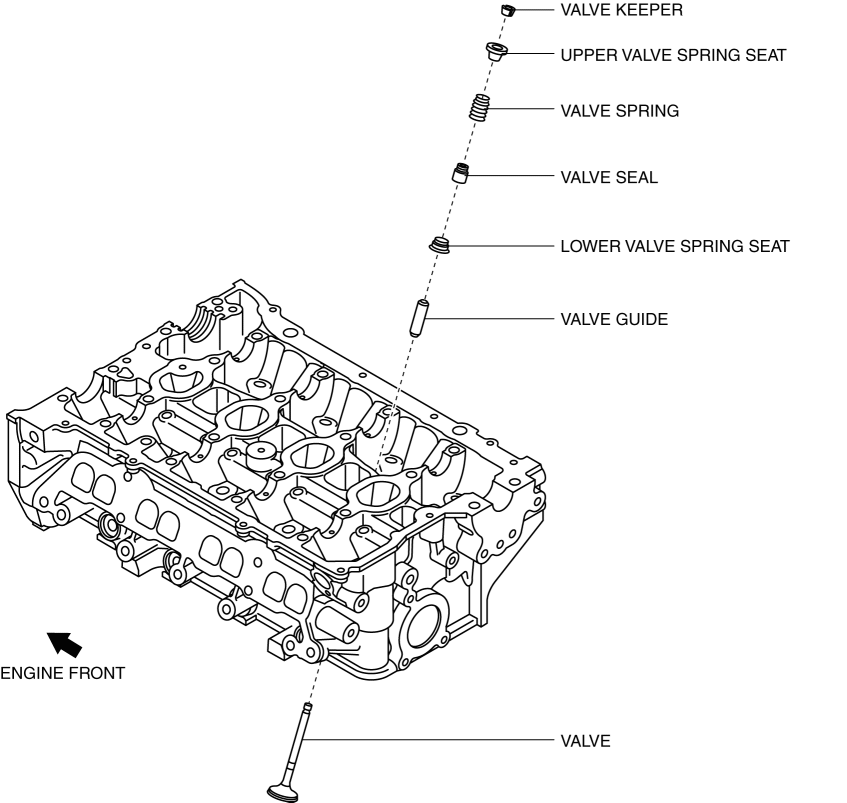
The intake valve is pressed down by the cam, the intake air passage is opened, and air is introduced into the cylinder.
The exhaust valve is pressed down by the cam, the exhaust air passage is opened, and combustion gas is exhausted from the cylinder.
The valve spring adheres to the valve seat by pulling up the valve by spring force, and air tightness in the combustion chamber is maintained.
The valve seal prevents engine oil from entering combustion chamber through the valve guide, and engine oil consumption is suppressed.
The valve guide maintains the valve stem to open and close the valve smoothly.
The valve guide cools the valve by transmitting valve heat to the cylinder head.
The valve, valve spring, valve seal, and valve guide are assembled to the cylinder head as a single unit.
The sliding resistance has been reduced by setting the valve spring load to the required minimum.
The intake valve and exhaust valve are subjected to a salt-bath, soft-nitriding treatment to enhance wear resistance.
Unequal pitch valve spring has been adopted. In addition, the upper diameter is smaller compared to the bottom diameter.
The valve guide is made of sintered alloy with excellent wear resistance.